

Our Materials
The experience of a leather journal begins with the material itself. Vegetable-tanned leather is appreciated for its natural structure, durability and the way it develops character over time. Below you can explore how this leather is produced, its natural characteristics and how it changes through everyday use.

Italian Vegetable-Tanned Leather
Our journals are made from full-grain vegetable-tanned leather sourced from Tuscany, Italy.
The leather is produced using traditional tanning methods based on natural plant tannins extracted from tree bark, mimosa, chestnut and other botanical sources. This process avoids chrome salts and preserves the natural structure of the hide.
The hides are a by-product of the food industry and are transformed into durable leather through traditional tanning.
The leather used in our journals comes from a Tuscan tannery certified by the Consorzio Pelle Conciata al Vegetale in Toscana (Genuine Italian Vegetable-Tanned Leather Consortium), ensuring authentic vegetable-tanned leather produced using established chrome-free methods.
Natural Character of Full-Grain Leather
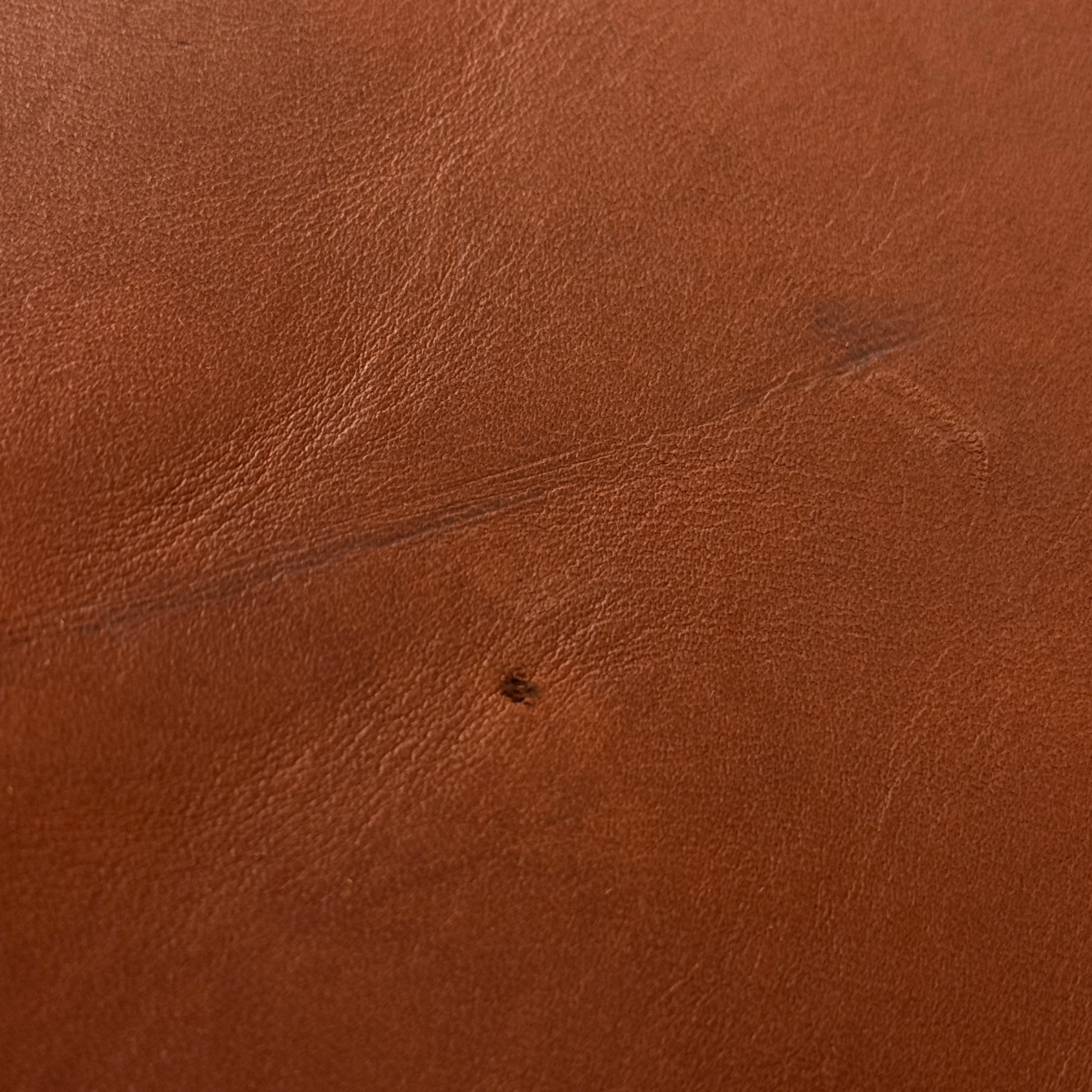
Full-grain leather preserves the natural surface of the hide rather than being sanded or heavily corrected.
Because of this, small natural features such as pores, veins, wrinkles or subtle marks may be visible. These are part of the material and reflect its natural origin.
During selection, hides are chosen to avoid imperfections. Some minor natural marks may remain, but they are limited and do not affect the structure or durability of the journal.
How Vegetable-Tanned Leather Ages
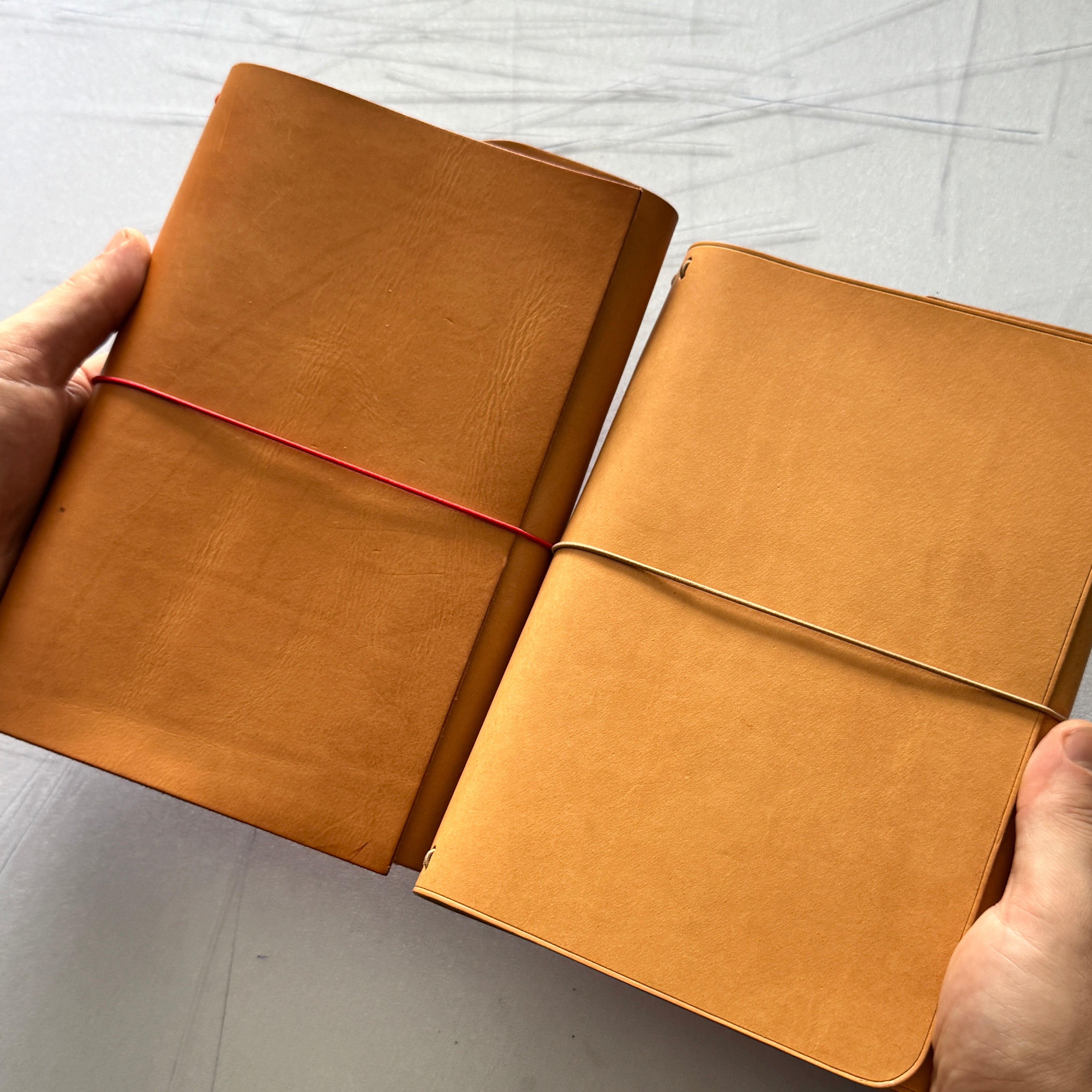
One of the defining qualities of vegetable-tanned leather is the way it changes over time.
Through everyday use, exposure to light and contact with hands, the leather gradually becomes softer and develops a deeper tone. The surface slowly forms a natural patina - a subtle transformation in colour and texture that reflects how the journal has been used.
Over time, colours become slightly richer, the surface feels more supple and small variations appear across the leather as it is handled and used.
Rather than wearing out, the leather becomes more distinctive with time, developing a richer and more personal appearance.
Leather Colours
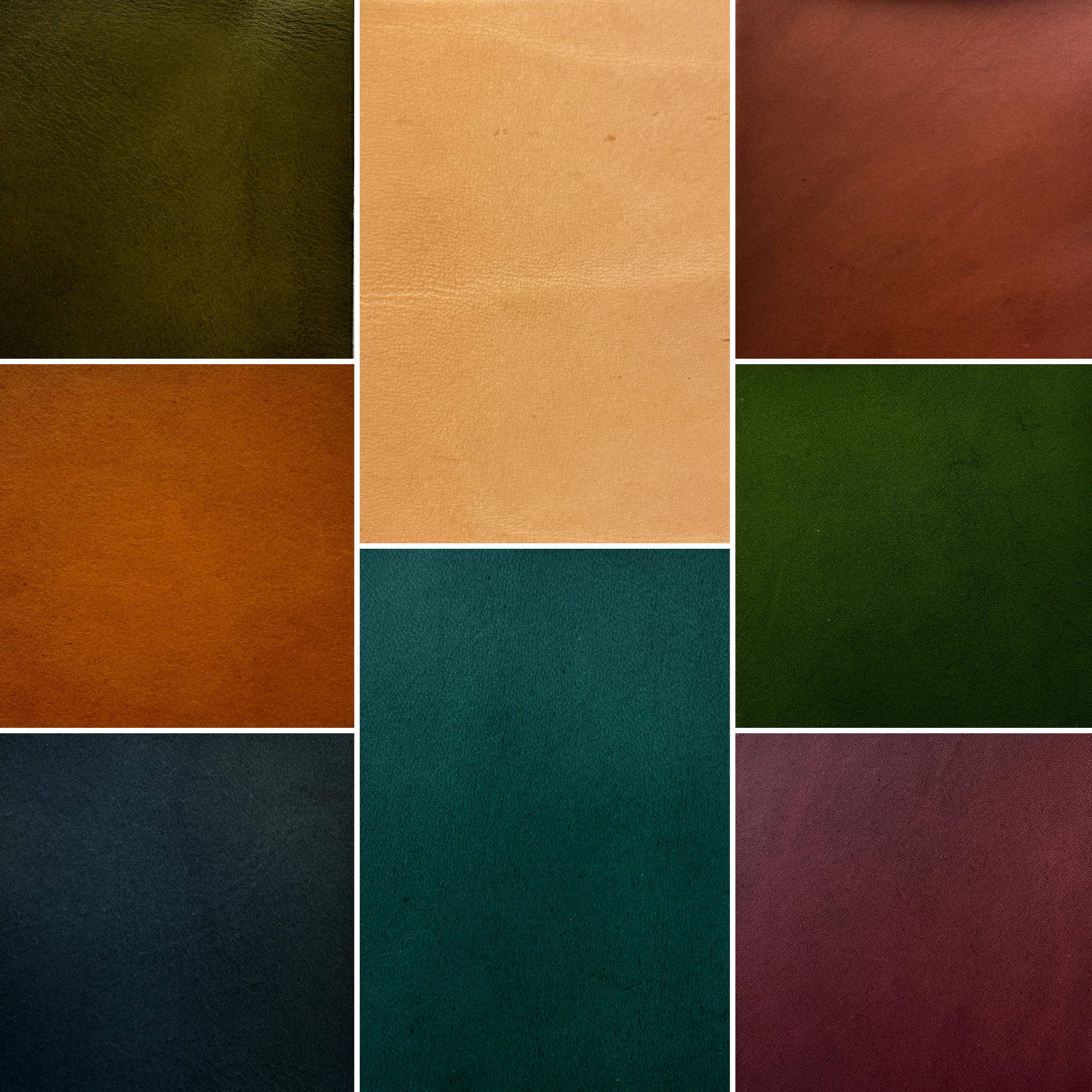
Vegetable-tanned leather colours have natural depth and variation. Because the leather is dyed using traditional processes, small differences in tone between batches can occur.
Over time the colour gradually deepens as the leather is exposed to light and handled during everyday use.
These changes are part of the natural aging process of vegetable-tanned leather.
Leather Care
Vegetable-tanned leather requires very little maintenance. Normal handling already nourishes the material through natural oils from the hands. If needed, simple care can help keep the leather in good condition for many years.
Care recommendations:
• avoid prolonged exposure to water
• allow the leather to dry naturally if it becomes wet
• occasionally apply a small amount of leather conditioner if the leather
becomes very dry
With regular use, the leather will remain durable and continue to develop character over time.